
 There is a broad mainstream of Christian theology out there. But there’s a shortage of high-quality educational materials that make those ideas accessible to adult laypeople. The Wesley Academy for Advanced Christian Studies fills this gap, bringing the teaching of the world’s best theologians right to you.
The Wesley Academy for Advanced Christian Studies — created in partnership with Wesley Theological Seminary in Washington, D.C. — has created courses and educational materials that are theologically rich and deep. The program is based on one core idea: that churches thrive when they are connected to a strong seminary, and seminaries are strong when they are affiliated with vital congregations. Its vision is to be a leading resource for the education of the whole church in the whole world. BeADisciple is pleased to be partnering with the Wesley Theological Seminary to bring the great courses they provide into an online setting. Read more about the work of Wesley Theological Seminary on their website.
Earn a certification, or take courses a la carte
Anyone, lay or clergy, can use these courses to earn a certification in Advanced Christian Studies. Learners must complete 6 of the 11 optional courses to earn the certification. There is no “starting course” — you may begin your work with any of the offered courses. Choose your emphasis:
Certification Option 1
Certificate in Advanced Christian Study – Wesleyan Emphasis
2 completed Methodist Identity courses
+
Any other 4 completed elective courses
Certification Option 2
Certificate in Advanced Christian Study – Theology Emphasis
Any 6 completed elective courses
(Methodist Identity courses not required)
A la Carte Option
Anyone — lay or clergy — can enroll in any of the courses available from the Wesley Academy.
Methodist Identity courses required for certification option 1 (Wesleyan Emphasis):
Methodist Identity: Our Story
What does it mean to be Methodist? The first of Wesley Academy’s two Methodist Identity courses guides learners through a series of lessons from leading Methodist scholars and features Christian historian Justo Gonzalez. Methodism is traced through its roots in Wesleyanism to its growth as a movement in the North Atlantic and, eventually, the world. Supplemental materials cover Methodism’s growth in Europe, Asia, Africa, and Latin America. Join us in this exploration of Methodist identity, which will benefit the lifelong Methodist, the armchair scholar, and the simply curious.
Lessons Include:
- John and Charles Wesley: The Early Years – Paul Chilcote
- Methodist Beginnings: 1725-1737 – Amy Oden
- Aldersgate and Its Results: 1738 – Steve Rankin
Methodist History: 1739-1744 – Henry Knight - Early Methodist Revival: 1740-1760 –Hoo-Jung Lee
Methodism in Britain: 1760-1791 – Peter Forsaith - The Legacy of Charles Wesley – S. T. Kimbrough
- American Methodism: 1740s-1860s – Douglas M. Strong
African Methodism in Early America – Dennis C. Dickerson - The Holiness Movement and Missions – Steven O’Malley
Global Methodism – Robert Hunt - Methodism and Social Holiness – Wendy Deichmann Edwards
2.0 CEUs are available.

Methodist Identity: Our Beliefs
This second of our Methodist Identity courses focuses on Wesleyan doctrine and is hosted by Gregory Ingram, featuring contributions by nine leading Methodist scholars. Eight hour-long presentations explore traditional teachings such as the Trinity and baptism from a Methodist perspective, but also explores teachings distinct to Wesleyan theology such as John Wesley’s division of divine grace. While oriented to the Methodist learner, this course will benefit anyone eager to glean from the tradition.
Lessons include:
1. The Nature of Methodist Doctrine – Sharon Grant & Ted Campbell
2. Divine Trinity and Christology – Scott J. Jones
3. Prevenient Grace and Repentance – Elaine A. Robinson
4. Justifying Faith and Assurance – Walter Klaiber
5. Sanctification – Sondra Wheeler
6. Baptism and Christian Initiation – Henry Knight
7. Eucharist – Lawrence Hull Stookey
8. Eschatology – Randy L. Maddox
2.0 CEUs are available.

Elective courses:
Devotion to Jesus: The Divinity of Christ in Earliest Christianity
In this unique course, renowned historian of Christian origins Larry Hurtado presents a layered, informed case for the worship of Jesus in the first century, refuting arguments claiming that such worship was a late addition. This course, presented in an encouraging manner by one highly respected in the field, serves as an introduction to the historical-critical study of Jesus and his community. The believing learner will leave with a knowledge of the antiquity of their piety, which has roots in the earliest communities of discipleship.
Lessons Include:
1. Introduction to Jesus Devotion
2. Roman and Jewish Backgrounds
3. Jesus in the Letters of Paul
4. Jesus in Jewish Christianity
5. Jesus in the Synoptic Gospels
6. Jesus in the Gospel of John
7. The Costs and Consequences of Jesus Devotion
8. How Did It Happen? Why Does It Matter Today?
2.0 CEUs are available.

In God’s Time: The Bible and the Future
Opinions on the Bible’s teaching about the future abound. This course provides much needed clarity, and an alternative to more sensationalist readings of the topic. Based on Craig Hill’s acclaimed book, In God’s Time asks the learner to think seriously and sensibly about the hope that is at the heart of Christian belief. This challenging course uses lectures, readings, and discussions to cover topics such as biblical interpretation, Jewish apocalyptic literature, and the texts of Daniel and Revelation.
This course follows a reading of In God’s Time. Participants will need a copy before the class begins
Lessons Include:
1. Are We There Yet?
2. The History of the Future
3. The Covenant Future
4. Apocalypse Then
5. Between the Testaments
6. Daniel
7. Revelation
8. Jesus and the Things to Come
9. The Once and Future Kingdom
10. Conclusion: Hope Unseen
2.2 CEUs are available.

Journey Through the Psalms
Based on the widely used book of the same title by Dr. Denise Dombkowski-Hopkins and featuring lectures from the author, this course works through the structure, themes, and deep spiritual value of the Psalms in eight weekly sessions. This scholarly-yet-accessible workshop is a sober exploration of the Psalter’s rich spirituality, uncovering ancient wisdom for the sake of prayer, worship, imagination, and church life.
Lessons Include:
Praying the Psalms
The Synagogue, the Church, and the Psalms
Your Hallelujahs Don’t Have to Be Hollow Anymore
You Get What You Deserve, Don’t You?
Complaining in Faith to God
Life in the Meanwhile
The Lord Reigns. Enthronement Psalms
1.5 CEUs are available.

A Life Worthy of the Gospel
In a complex world of shifting ideals, discerning faithful practice is often a challenge. This course seeks guidance for the task in Biblical and traditional sources, urging the learner to reflect on what it means to live “worthy of the Gospel” today. Noted ethicist Dr. Sandra Wheeler presents a digestible yet challenging introduction to Christian ethics in six sessions. Avoiding the typical approach of simplistic lists and the “either/or,” Wheeler prioritizes the formation of character, presenting faithful practice as a journey of development. The course ends with a case study that illustrates the piercing nature of such an approach.
Lessons Include:
1. Introduction: A Christian Way of Living?
Four Models for Christian Ethics:
2. Scripture: The Story that Forms Us
3. Augustine: Ordering Our Loves
4. Luther: The Spirit of Christian Life
5. Wesley: Transforming Grace
6. Conclusion: Learning from Our Traditions — A Test Case
1.5 CEUs are available.

Passionately Christian, Compassionately Interreligious
Religion is a critical element of our ever-globalizing world, making the interreligious perspective and possibilities of key importance. This course introduces a number of primary world religions from a generously Christian horizon, guiding the learner to engage our religiously saturated world with both understanding and graciousness. Here you will explore varied religious beliefs, practices, and traditions and may even find divine wisdom in unexpected places. A course both gentle and provocatively wise in its presentation of a theology that is at once Christian and graciously wide.
Lessons Include:
- Our Christian Gospel and God’s Interreligious World
- Hinduism
- Islam
- Buddhism
- Sikhism
- Judaism
- Atheism
- Theological mediation on passion for Christ & compassion for all God’s family
- Christian mission in a world that is compassionately interreligious
2.0 CEUs are available.

Religion and Science: Pathways to Truth
For centuries the relationship of religion to science has been fraught. Even today science is invoked as a reason to reject faith as outdated and outmoded, but are such conclusions necessary? Must we reject belief in order to accept the fruits of science? Is antagonism the only relational possibility? In this course, Dr. Francis S. Collins hosts a series of lessons led by leading scientists, theologians, and philosophers. These lessons explore the relational possibilities for religion and science over a host of relevant topics, probing the possibilities of coexistence or even collaboration if mutual benefit is possible in our century.
Lessons include:
1. Introduction — Francis S. Collins, Director, The Human Genome Project
2. Friends or Foes? The Story of a Complex Relationship — David Wilkinson, St. John’s College, Durham
3. Truth in Science and Theology — Philip Clayton, Claremont School of Theology
4. God and Nature — Keith Ward, Oxford University
5. Creation and Evolution — Darrel Falk, Point Loma Nazarene University
6. What Does It Mean to Be Human? — Warren Brown, Fuller Theological Seminary
7. The God of Hope and the End of the World — John Polkinghorne, Cambridge University
8. Genetic Science and the Frontiers of Ethics — Ted Peters, Pacific Lutheran Theological Seminar
9. Creation Care
2.0 CEUs are available.

Serious Answers to Hard Questions
How can one experience evil and still believe in a loving God? How should Christians relate to other faiths? Is the Jesus of history the same as the Jesus of faith? What about the sins of the church? In this course, join ten Jewish and Christian theologians, experts in their field, in addressing these and other such questions that often plague the thoughtful Christian. This bold course and its discussions will equip the earnest seeker with tools for confronting such questions with confidence.
Lessons Include:
1. Evil — R. Kendall Soulen, Wesley Theological Seminary
2. Religion and Science — John Polkinghorne, Cambridge University
3. Other Religions — Sathianathan Clarke, Wesley Theological Seminary
4. Evangelism and Tolerance –Scott Jones, Bishop; formerly Perkins School of Theology
5. The God of the Old Testament — Amy-Jill Levine, Vanderbilt Divinity School
6. Jesus and Christianity — Richard B. Hays, Duke Divinity School
7. Resurrection — N. T. Wright, Bishop; formerly Oxford University
8. The Gnostic Gospels — Ben Witherington, Asbury Theological Seminary
9. The Sins of the Church –Douglas M. Strong, Wesley Theological Seminary
10. Forgiveness — L. Gregory Jones, Duke Divinity School
2.2 CEUs are available

Simply Christian
What defines the core of Christian faith, and is faith in Jesus reasonable in the 21st century? In this course, world-renowned Bible scholar and theologian N. T. Wright presents and explains the timeless truths of Christianity, based on his acclaimed book Simply Christian. Wright leads both earnest Christians and seekers through 10 lessons exploring why Christianity makes sense today. The daily readings, reflections, and discussions are illuminated by Wright’s video lectures. Join us in this pastoral exploration of faith in the present by one of the most well-recognized pastor-theologians working today.
Learners will need a copy of Wright’s book Simply Christian: Why Christianity Makes Sense before the course starts.
Lessons include:
1. Introduction to Simply Christian
2. Justice & Spirituality
3. Relationships & Beauty
4. God
5. Israel
6. Jesus
7. The Holy Spirit
8. Worship & Prayer
9. Scripture
10. Church & New Creation
2.2 CEUs are available.

Women Speak of God
In this beloved Wesley Academy course, we explore how remarkable women have sought faithful living in diverse cultures, times, and social locations – often amid great adversity. Dr. Amy Oden, distinguished professor of Christian history, provides accounts of six women who documented their faith journeys. In this workshop valuable for all, you will explore how we, as members of a Christian community, connect with such “family stories” as well as examining your own place and experience within.
Lessons Include:
Perpetua: Rebellious Daughter (2nd century Carthage)
Macrina: Scientist and Pastor (4th century Asia Minor)
Juana Inez de la Cruz: Intellectual in the Kitchen (17th century Mexico)
Susanna Wesley: First Theologian of the Methodists (18th century England)
Jarena Lee: Preaching Pioneer (19th century United States)
Georgia Harkness: Theologian for the People (20th century United States)
1.5 CEUs are available.

Leading Like Nehemiah
Our newest course in the Wesley Academy looks for wisdom in the story of an often-overlooked Bible character: Nehemiah, and his testament to the holy calling of leadership. The story of the rebuilding of Jerusalem is well known. Lesser known are the lessons Nehemiah provides to the faithful leader today, lessons like: the role of prayer, discernment of vision, development of a team, and perseverance through the inevitable challenges today’s church leader faces. Join us in this six-week course to explore these virtues of faithful leadership.
1.5 CEUs are available.

Courses are offered twice per year. If the course you are interested in is not currently enrolling, click the “Notify me” button on the course page to receive a notification when dates are set.
From the Program Director
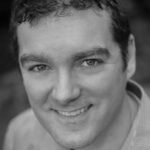 Dr. Michael Beardslee has led the Wesley Academy program since 2016, with one short interruption as Southwestern College’s Visiting Scholar. Michael’s work sits at the intersection of theology and culture, with emphasis on the theological exchange that happens between cultures. His doctoral work, completed at Fuller Seminary under renowned Pentecostal theologian Amos Yong, explores the concept of orthodoxy in a globalized world. His ideas have been published in works by publishers Brill and InterVarsity Press, and in academic journals such as Religion and Theology and Studies in World Christianity. He holds degrees from Friends University, Pittsburgh Theological Seminary, and Trinity International University. Michael leads the occasional Wesley Academy course, where he uses personal conversation and probing questions to gently urge learners into a broader and deeper understanding of faith.
Meet the Instructors
Rev. Beth Perry
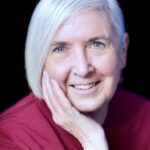 Rev. Beth Perry graduated from Princeton Theological Seminary with an M.Div. in 1994 and has a bachelor’s degree in business from Elizabethtown College. She was ordained in the United Methodist Church and then had Privilege of Call in the United Church of Christ. In addition to decades of pastoral and chaplaincy experience, she has taught college religion, critical thinking, and sociology courses, and has been a frequent guest preacher, public speaker, and church consultant. She was the Safe Sanctuary consultant for NYAC for five years, developed a digital Bible study, mentored seminary students, and served on numerous boards and committees. She is the author of “Storytelling: Beyond the Sermon,” “Women Mystics in the Christian Tradition,” and “The Study: Spiritual Action in Daily Life,” and had published articles in “Opposing Viewpoints” textbook, the WITF public television magazine, the Academy of Parish Clergy, The Progressive Populist, etc. She has been an instructor with BeADisciple.com since 2010 and was on staff from 2021 through 2025, living out her vision to “empower others through education and training.”
Barbara Justis
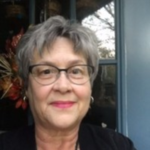
Barbara Justis is an administratively gifted lay servant influenced by the gifts of leadership and service. She has more than 20 years of lay servanthood experience serving the Lay Servant Ministries program in the Eastern Shore/Coastal Virginia District of the United Methodist Church. She is a retired NASA civil servant and flight operations project manager who, as a Certified Lay Minister, served as a Lay Supply Pastor while working full-time (2015-21). Barbara believes her servanthood roles in the areas of military service, civil service, and God’s service have greatly complemented one another. Her passion is leading lay servants to discover, develop, and deploy their gifts-based ministry. Barbara is a BeADisciple.com super-learner, having completed 78 of her 110 accumulated CEUs through the online learning platform.
Jerra Jenrette
 With a Ph.D. in history and an M.A. in religious studies, Jerra Jenrette has taught a wide range of courses during her 34-year academic career. These have included History of Christianity (at both the undergraduate and graduate levels), US and European Women’s history, Salem Witch Trials, and various domestic and study abroad trips. During her work for her religious studies degree, she took multiple courses that focused on Hebrew Bible and Judaisms. She has taught courses for her church on “Herstory: Women in the Bible” and “Herstory II: Bad Women of the Bible.” In addition, courses completed through her local Lay Ministry School and BeADisciple.com have allowed Jerra to earn her Lay Servant, Lay Speaker, and Lay Minister (CLM) certifications. Jerra is an avid reader of theology and history and has a deep interest in examining Scripture through multiple lenses.
Rev. Dr. John Noggle
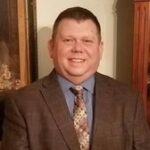 Rev. Dr. John Noggle joins the Wesley Academy team with 35 years of pastoral experience, as well as time spent as a history teacher and service in the United States Army. He brings to the Wesley courses a passion for discipleship and the Gospel, infusing his teaching with an appreciation of the histories — contexts, content, and cultures — of the relevant religious traditions. John is passionate about equipping the church to be a vital presence for Christ in local communities through outreach ministries, Bible studies, and direct community involvement. John holds a Doctor of Ministry degree from Southern Methodist University and an M.Div. from Phillips Theological Seminary, with prior degrees in history and education.
Dr. Asayo Okumura Thomas
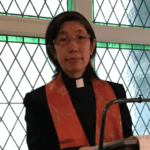 Dr. Asayo Okumura Thomas is an ordained minister in the United Church of Christ of the Metropolitan Association, New York Conference.
She was born and raised in Japan, breathing in the grace and embraced by the love through her mother’s bodhisattva sutra chanting. Her doctoral research project at the New York Theological Seminary was “The Sea of Silence: Ceaseless Renewal of the Mind and Heart in Unification of the Trinity through Mindful Meditation.”
Currently, she serves at the Community Church of the Pelhams as an assistant pastor for spiritual development. Her spiritual gift is to invite people to open their hearts gently and naturally to be reunited with the love of God through a mindful meditation with biblical verses in Lectio Divina or the ancient Mystic method. She loves to be in nature, like floating on the ocean wave, walking in the forest communicating with trees, and contemplating in birds singing or simply silence.